


Businesses in 2026 are no longer debating whether artificial intelligence should be part of their growth strategy. The conversation has evolved beyond adoption and now focuses on how organisations can combine human expertise with intelligent systems to achieve better efficiency, stronger customer engagement, and long-term scalability.
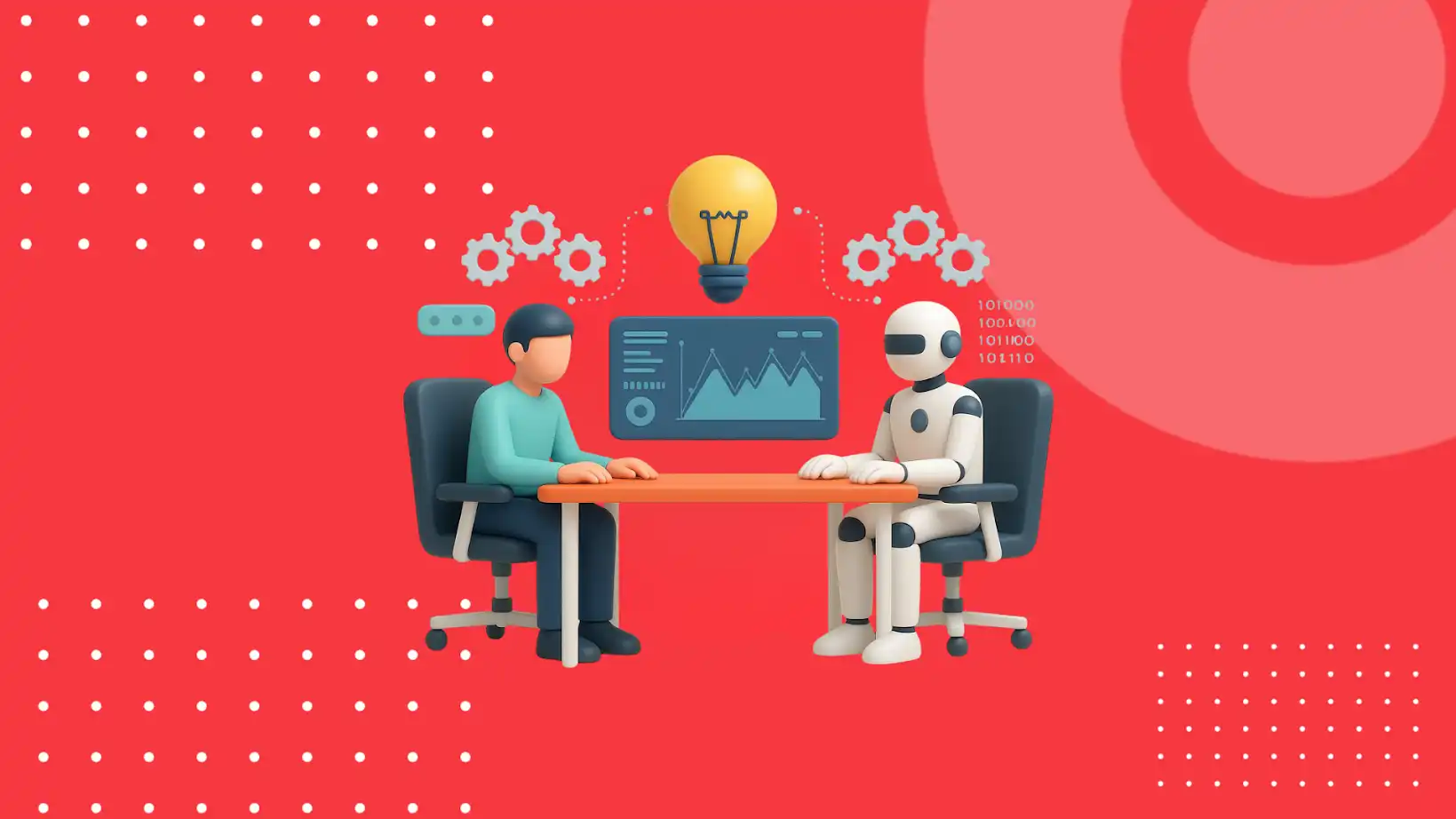
This shift has made human AI collaboration one of the most important business models in the modern digital landscape. Instead of viewing AI as a replacement for people, businesses are now using it as a tool that strengthens human capabilities.
Organisations that successfully implement Human+AI collaboration are becoming more agile, data-driven, and adaptable in an increasingly competitive digital economy.
The real value of AI becomes visible when it is integrated with human expertise. Across analytics, operations, marketing, and customer experience, businesses are building collaborative systems that combine automation with strategic execution.
One of the most effective examples of human and machine collaboration can be seen in data analysis and business intelligence. Modern AI systems powered by machine learning are capable of processing large volumes of data within seconds. But while AI can identify trends and provide analytical outputs, human interpretation remains essential.
When businesses combine AI-driven insights with strategic human oversight, decision-making becomes faster, more accurate, and more aligned with long-term goals.
The rise of generative AI has significantly transformed content creation and creative production processes. Businesses now use AI tools for idea generation, content drafting, workflow support, personalisation, and research. This has improved efficiency and reduced production timelines across multiple industries.
Despite these advancements, creativity still depends heavily on human direction and insight. This balance between technology and creativity is becoming increasingly important in digital marketing environments where brands are expected to produce large volumes of content without losing quality or identity.
Businesses are increasingly adopting AI Automation to manage repetitive and time-consuming operational tasks. Activities like reporting, scheduling, customer support processes, workflow management, and data organisation can now be automated more efficiently and accurately through intelligent systems. Automation helps reduce manual workload, minimise operational errors, and improve overall productivity. It also enables businesses to scale processes without significantly increasing resources or operational complexity. The most effective operational systems are those where automation supports human teams rather than replacing them completely.
The role of AI in digital marketing has expanded rapidly in recent years. Businesses and agencies are now using AI to analyse customer behaviour, automate targeting, improve segmentation, and optimise campaign performance more efficiently. AI can identify engagement patterns, predict behavioural trends, and optimise advertising performance in real time. At the same time, human expertise remains central to storytelling, strategy, and brand positioning. This collaboration between automation and creativity is what makes modern marketing more scalable and effective.
Customer expectations have evolved significantly, with users now expecting faster, more personalised interactions across digital platforms. Businesses are using AI-powered tools such as chatbots, recommendation systems, and behavioural analytics to improve responsiveness and customer engagement. While these systems improve efficiency and support personalisation, human interaction remains essential for building trust and managing emotionally sensitive conversations. Customers still value empathy, reassurance, and personalised support in situations where automation alone may feel impersonal.
Businesses implementing collaborative AI models are experiencing measurable improvements across operations, marketing, and customer engagement. Some of the key benefits include:
The value of AI becomes significantly stronger when combined with strategic human involvement and creativity.
A digital marketing agency uses AI to improve targeting, automate tasks, and increase business growth with smarter campaigns and faster decisions.
The future of modern AI for business growth lies in collaboration rather than competition between humans and technology. Human AI collaboration enables businesses to combine the efficiency and speed of intelligent systems with the creativity, strategy, and emotional understanding. Organisations adopting collaborative AI models are already improving operational efficiency, scalability, customer engagement, and marketing performance. More importantly, they are building systems that are more adaptable to changing customer expectations and evolving digital markets.
It refers to a model where humans and AI systems work together to improve efficiency, decision-making, and innovation.
AI improves automation, analytics, customer targeting, and operational efficiency, helping businesses scale more effectively.
AI helps analyse customer behaviour, automate campaigns, personalise communication, and optimise marketing performance.
It combines the efficiency of AI with human creativity, strategy, and emotional intelligence to create stronger business outcomes.